
The packing floor, where items become one parcel
Leg one of three, stops 01 to 04
Policy and interface examples below come from official captures checked on 10 October 2026. Timings are published indications, not guaranteed delivery dates. Older UI amounts, offers and routes are illustrative; current order terms and checkout govern. Open an image for full size.
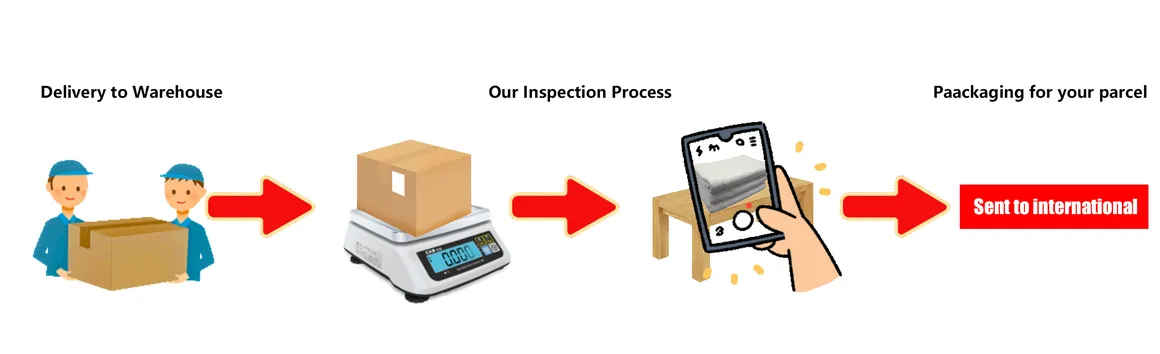
This page follows the warehouse part of the journey. The retained help pages identify the warehouse city as Xiamen. A box that does not exist yet becomes a sealed, labelled parcel here, and four machines touch it on the way: a scale, a camera, a shelf and a tape gun. Each one leaves a record you can open from your account.
Warehouse decisions affect both cost and evidence: which item photos to request, which goods to group, what protection to keep and when to submit. Resolve visible item problems before international dispatch. Later delivery and claim actions still exist, but they cannot recreate a missing warehouse measurement.
the intake scale
A courier bag arrives and gets weighed
The seller sends the purchased order to the warehouse. The tutorial gives a 3–5 working-hour review indication and a 3–5 day domestic delivery indication; seller dispatch and stock can change the wait. A courier delivery scan and a completed warehouse intake are separate records.
Forwarded parcels ride the same scale. If you bought elsewhere and only use the warehouse to consolidate, your inbound box is weighed and logged at the same door, under a transit order instead of a purchase order, and joins the same shelf system. The scale does not care who did the shopping.
Two different weights exist in the system and the help centre is precise about which is which: product weight is what the scale reads now, parcel weight is what the sealed box will read at stop 04 with the carton and filler included. Freight quotes run on the first until the second exists.
The intake gram figure is an item measurement for planning. It is not automatically the amount charged for the first freight payment: the parcel submission uses an estimate with its chosen route and packing options. Final packed weight, dimensions, minimums and rounding can change the billable amount.
the photography bench
The item goes under a camera before it goes on a shelf
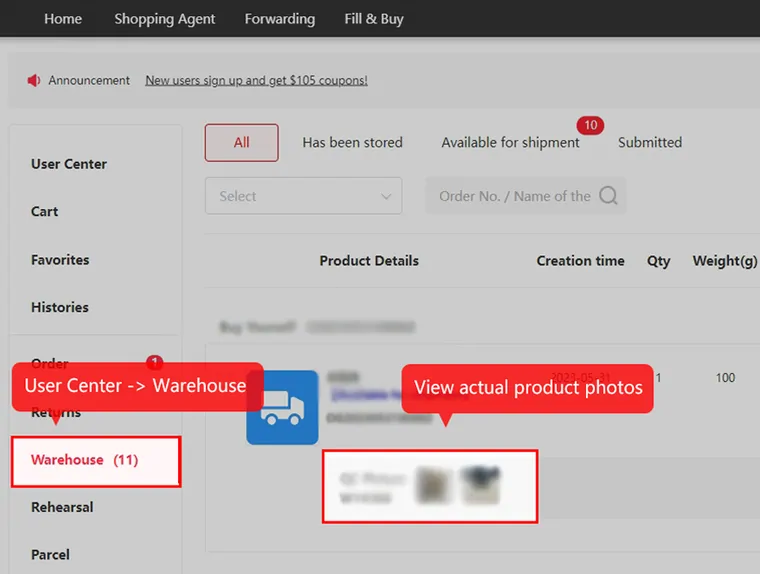
Next to the scale sits a camera. Garments, bags, suitcases and shoes are opened and photographed; factory-sealed packs and anything with a sealing strip are shot as they are, unopened, and electronics are photographed without any function or authenticity testing. Those are the operator's published photography rules, and they decide what you will be able to see later.
The photos land in your account under Warehouse, behind a button the interface labels QC Picture. That is where you check colourway and visible condition while seller-dependent return or amendment options may still be available. Reading the QC photos takes two minutes and a method: match the colourway against the listing photos, zoom the stitching and any print edges, and count pieces against what you ordered. Item photos from this bench are not the parcel photos of stop 04: this camera shoots what you bought, that one shoots the box it leaves in.
The no-opening rule for sealed packs has a straightforward logic: a factory seal is itself part of the product, so the bench photographs the pack as an object rather than destroying the seal to show the contents. If you want the inside of a sealed item on camera, that is a decision to make before buying, not a request the bench can grant after.
One paid extra exists at this bench: additional photographs at 2 yuan per photo, returned with a published indication of 24 hours. Request the specific image or measurement that resolves your concern; no fixed free item-QC photo count is established.
the shelf
One hundred days on a rack, with a rehearsal option
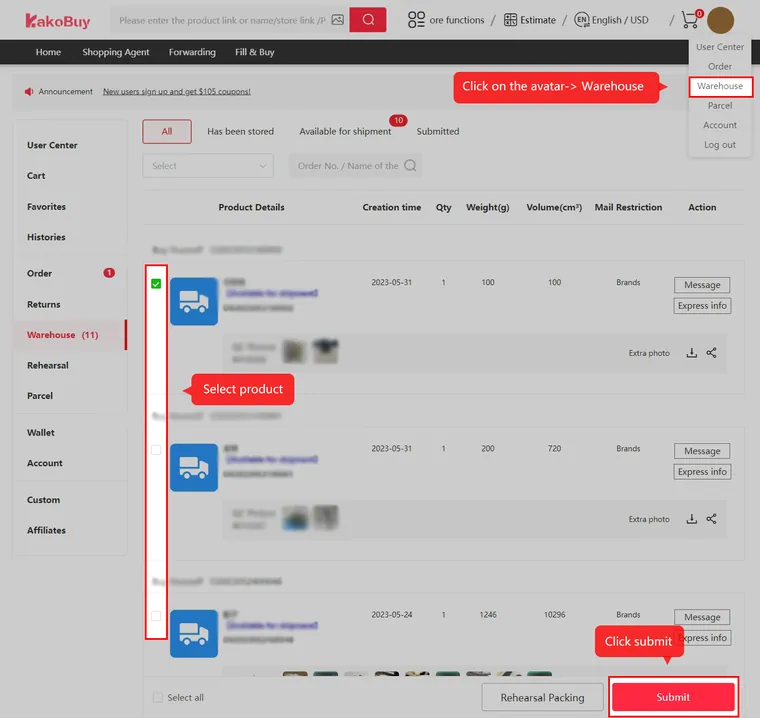
After the camera, the item is racked. The retained policy gives normal orders 100 free days from In storage, with a reminder at day 90. Abnormal parcels have a separate 60-day clock from Signed for. Neither window extends the seller return deadline; eligible ordinary return requests have a separate 120-hour window from Stocked in. The shelf is also where your order stops being one thing and becomes a list: each row in your Warehouse tab shows the item, its creation date, its weight in grams and its measured volume in cubic centimetres.
While goods sit here you can pay for a rehearsal the operator calls pre-packing: 18 yuan, and within a day the floor packs your selected items for real, weighs the result, and writes the packed weight back to you. The request form wants the parcel or product id in the remark line, an S-prefixed number for a submitted parcel or the OG-prefixed order number when no parcel exists yet, plus any packing wish such as discarding shoe boxes. If your later, real submission changes those packing requirements, the rehearsal weight is not carried over; the answer arrives as a message instead.
Pre-packing can provide packed measurements for a more useful estimate. The chosen route still decides whether actual weight, dimensional weight, a minimum or rounding determines the charge. Item weight alone does not establish the final bill.
The shelf has an end. The captured extension service lists CNY10 per order per 30 days and mentions cooling-off; do not treat that wording as a guaranteed extra free month. Check the order’s actual deadline before purchasing an extension, and goods that outstay everything are treated as abandoned and destroyed, in the policy's own words, with perishables capped at a month regardless. The rack is a pause button, not a cupboard.
the packing bench
Submission wakes the tape gun
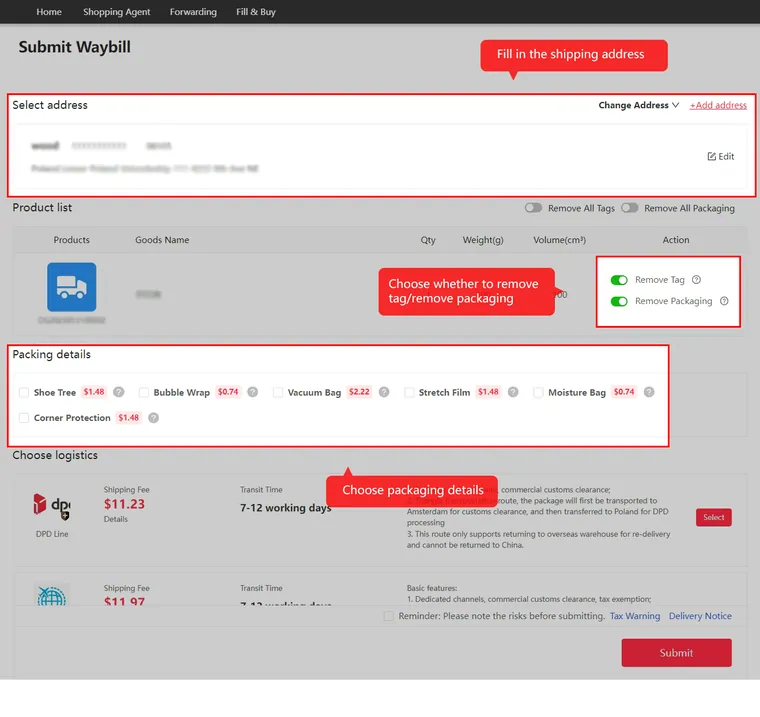
Parcel submission asks the warehouse to pack the selected stored items. The retained help gives a 24-hour packing indication, not a guaranteed completion time for every request. It lists CNY 8 packaging consumables; compare that with the actual itemisation and the separate, unresolved declaration-charge reference. Protective add-ons have their own displayed prices.
If you ticked the free parcel photo service while submitting, the bench photographs three moments on an actual-weight route: the items laid out before sealing, the sealed box, and the sealed box sitting on the scale with the display readable. Routes billed by volume swap the scale shot for a second sealed-box angle. Untick the box and nobody shoots anything; the service cannot be added after the fact.
The paid add-ons are physical acts, not checkboxes. Vacuum packing collapses soft goods into a denser, smaller box, which is volumetric arithmetic you can buy; reinforcement wraps fragile goods after you accept the printed condition that fragile items travel at the buyer's risk; a shoe tree holds a toe box's shape against five thousand kilometres of handling. Each one changes what the box physically is before the label goes on.
The packed measurement closes the loop opened at intake. Compare the final parcel weight and dimensions with the initial estimate and selected route rule. The captured process describes a balance refund or additional payment when the final freight differs; check any shortfall and its cause before paying. An unpaid required shortfall can hold dispatch.
When the parcel measurement surprises you
First confirm which items belong to the parcel. Then compare actual scale weight, outer dimensions, retained boxes and added protection with the estimate or rehearsal request. A changed packing instruction can explain a changed result; item weights alone cannot show the volume of the finished box.
If the difference remains unexplained, send the parcel number, selected item numbers, packing instructions and both measurement records to support. Ask which measurement and billing rule produced the charge. Keep the parcel pending until the answer resolves the decision, while watching each item’s separate storage deadline.